


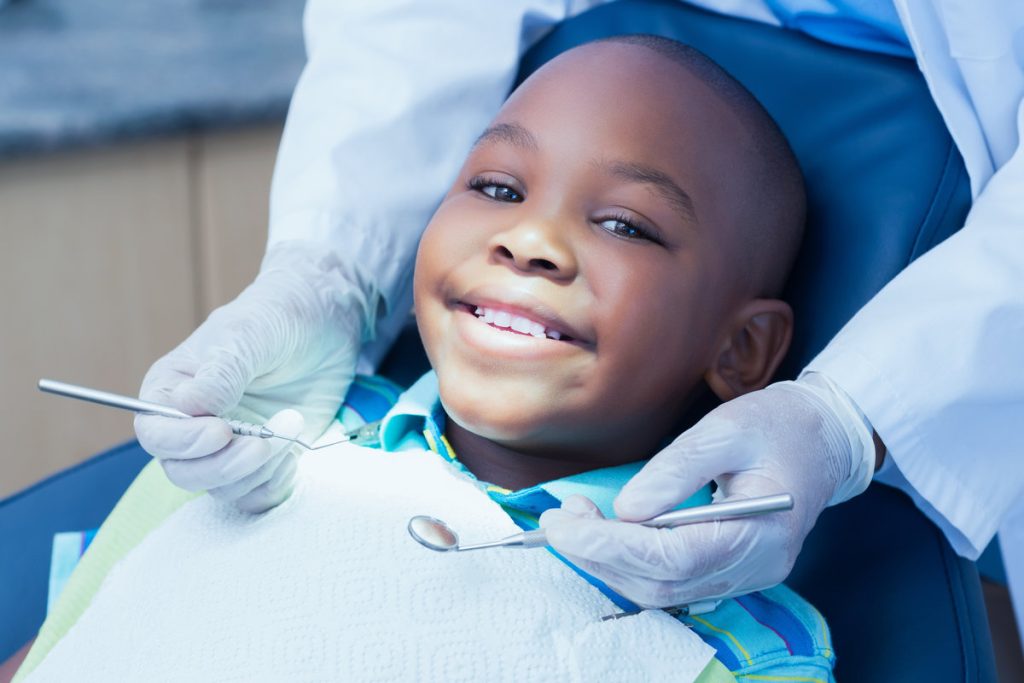
A baby tooth that will not come out at age 10 can stick around for several reasons. There may be no permanent tooth pushing up from below, the root could be fused directly to the jawbone, or there may not be enough room for the new tooth to come through. It can look a little unusual in a ten-year-old’s smile, but it is rarely a reason to worry.
HulaGrins Pediatric Dentistry hears this question from South Bay families regularly, and there is usually a clear explanation once we take a look. Our team can walk you through what is happening and what, if anything, needs to happen next as part of our pediatric dentistry services.
What Keeps a Baby Tooth from Falling Out?
A baby tooth normally loosens because the permanent tooth underneath pushes against its roots, causing them to dissolve over time. When that process stalls, a few things are usually to blame. Sometimes there is no permanent tooth underneath to push it out at all, so the baby tooth just stays put because nothing is asking it to leave. Crowding can play a role too, because a permanent tooth without enough room in the jaw may take a longer, slower path to the surface.
In other cases, the baby tooth fuses directly to the surrounding bone, a condition called ankylosis. Once fusion happens, the tooth cannot loosen the way it should, even as the teeth around it continue to erupt normally. According to the American Academy of Pediatric Dentistry, this fusion shows up in roughly 7 to 14 percent of primary teeth, making it a fairly common reason behind a tooth that will not come out on schedule.
Signs Parents Should Watch For
A little variation in timing is normal, and not every retained tooth signals a problem. Before your next visit, it helps to know which patterns are worth mentioning to your child’s dentist.
- Height: The tooth sits noticeably lower or higher than the teeth beside it.
- Wiggle: The tooth still feels completely solid, with none of the looseness you would expect at this age.
- Spacing: Neighboring teeth begin to tilt, drift, or crowd into the space around the retained tooth.
- Timeline: Six months or more have passed with no permanent tooth working its way in.
Any one of these patterns is worth mentioning at your child’s next appointment, because catching the cause early tends to make treatment easier.
What Can Happen if a Retained Tooth Is Left Alone
Most retained baby teeth cause no harm and simply need monitoring, but a few situations call for a plan. A tooth that is truly stuck can block its permanent successor from finding a clear path, which sometimes pushes that tooth into a crooked or sideways position. Crowded, tilted teeth can also make it harder for permanent teeth to come in the way they should, which is one reason it helps to have a dentist keep an eye on that section of the mouth.
Left unchecked for long enough, a retained tooth can also become harder to remove, because root structure and surrounding bone continue to change with age. That is one reason dentists like to catch a retained tooth within the first year or so of noticing it, rather than waiting to see whether it resolves on its own. Addressing a retained tooth while your child is still in mixed dentition, when baby and permanent teeth share the mouth, tends to make treatment more straightforward for everyone involved.
How We Evaluate a Retained Baby Tooth
A dental exam with X-rays is the only reliable way to see what is happening below the gumline, because a permanent tooth can be present, missing, or blocked without any outward sign. Our board-certified pediatric dentists, Dr. Sena Hiradate and Dr. Sonya Lin, review those images together to figure out whether the tooth needs to come out, needs more time, or needs a referral for an orthodontic opinion. If your child is coming in for the first time about this concern, our comfortable, child-friendly office is built to keep the visit low-stress and easy on little nerves.
Trust HulaGrins Pediatric Dentistry with Your Child’s Smile
A baby tooth that lingers past its expected exit is rarely an emergency, but it is something your child’s dentist should evaluate. At HulaGrins Pediatric Dentistry, pediatric dentists combine advanced imaging with years of experience to determine why a tooth has not fallen out and what should happen next. If this will be your child’s first visit with us, our team will make sure you know exactly what to expect from the moment you arrive.
If you’ve noticed a baby tooth hanging on longer than expected, contact our office to schedule an evaluation. We’ll answer your questions, explain what we find, and help you decide on the next step with confidence.