


For many parents, scheduling a child’s first dental appointment comes with a mix of uncertainty and a few unanswered questions: What will they actually do? Will my child cooperate? Is this visit even necessary if no teeth have come in yet? These are the right questions to be asking, and the answers can make the whole experience far less daunting.
At HulaGrins Pediatric Dentistry in Torrance, Dr. Sena Hiradate and Dr. Sonya Lin see families through that first visit every week, and they understand exactly what parents are walking in feeling. Our pediatric dentistry services are designed to be welcoming and informative from the very first appointment, with a team that takes the time to explain what is happening and why. With over 15 years of combined experience, our doctors make sure that both you and your child leave feeling at ease.
When Should the First Visit Happen
The American Academy of Pediatric Dentistry, the American Dental Association, and the American Academy of Pediatrics all share the same recommendation: a child’s first dental visit should occur within six months of the eruption of the first tooth and no later than age one. That window is not arbitrary. Early visits allow a provider to identify risk factors for decay before problems develop, and research consistently shows that children who establish a dental home before their first birthday have significantly lower dental costs over their first five years of life.
Most children come in for the first time much later than this, often because parents assume there is nothing to evaluate until more teeth arrive. In reality, waiting means missing the window when prevention is most impactful.
What the Appointment Actually Looks Like
For very young children, the first visit is typically brief and non-invasive. Infants are often examined using a knee-to-knee technique, where the child rests with their head in the provider’s lap while the parent holds their hands and legs. This position gives the provider a clear view of the mouth without overwhelming the child. Some infants may cry during this process, which is completely normal and does not mean anything is hurting them. Our team is attentive to both the child and the parent throughout the exam, and we always approach these early visits with care and sensitivity.
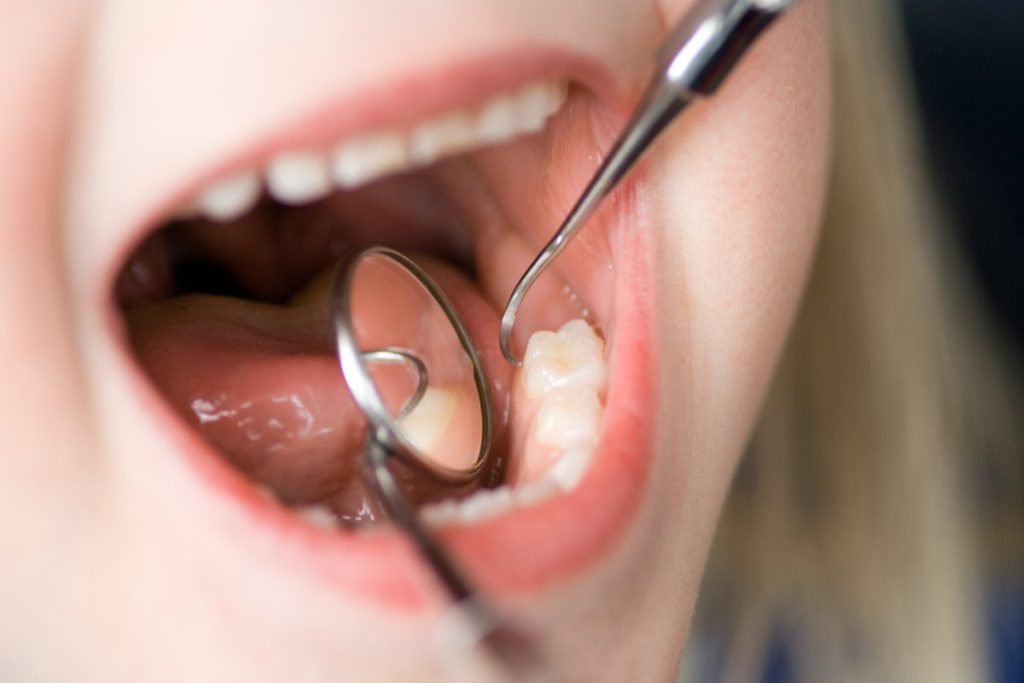
During the exam, our doctors check the gums and soft tissues, assess any erupted teeth for early signs of decay, evaluate bite development, and look at factors that could affect how the teeth and jaw are growing. For example, issues like tongue-tie or lip-tie restrictions may be identified at this stage. Dr. Sonya and Dr. Sena can assess for these restrictions, and Dr. Sena performs any soft tissue laser procedures when treatment is indicated, using the LightScalpel CO2 laser.
Preventive Care at the First Visit
Depending on your child’s age and risk factors, the first visit may also include a fluoride varnish application to strengthen developing enamel. Our team will walk you through proper brushing technique for your child’s current stage and discuss feeding habits, pacifier use, and teething. Nothing about this visit should feel alarming; it is primarily an opportunity to get a baseline and give you the information you need.
What to Bring and How to Prepare
The following items are helpful to have ready when you arrive:
- Insurance information: We accept Delta Dental PPO, MetLife, Guardian, and several plans under the Careington umbrella, including Cigna, some Anthem Blue Cross/Blue Shield, Humana Dental, and United Concordia.
- Medical history: Any known health conditions, medications, or prenatal and birth history for young infants.
- A comfort item: A favorite toy or blanket can help younger children feel more secure in a new environment.
- Your questions: Write them down ahead of time so nothing gets forgotten in the moment.
Arriving a few minutes early gives you time to complete intake paperwork and let your child get comfortable with the space before the appointment begins.
How to Talk to Your Child About the Visit
For toddlers and preschool-aged children, how you frame the visit matters. Avoid using words like “shot,” “drill,” or “hurt,” even in the context of reassuring them that nothing will hurt. Instead, describe the visit as a chance to meet someone who counts teeth and keeps them strong. Short, matter-of-fact explanations work better than long build-ups that give a child time to anticipate anxiety.
Playing “dentist” at home, where you and your child take turns counting each other’s teeth, can also normalize the idea of having someone look in their mouth. The more familiar it feels before you arrive, the smoother the appointment tends to go.
HulaGrins Pediatric Dentistry: Where First Visits Set the Tone
Dr. Sena Hiradate grew up in Torrance and has been connected to this practice since she was a child, and then as a teenager, first as a patient and eventually as the owner. That history shapes the kind of care HulaGrins provides. Our office environment is built around the idea that a child’s early dental experiences determine how they feel about the dentist for the rest of their life, and our entire team, from the doctors to the support staff, is focused on making those experiences genuinely positive.
If your child is approaching their first birthday or you have been meaning to schedule that first appointment, we are here to make it easy. Reach out to our team to schedule your visit and take that first step toward a lifetime of healthy smiles.